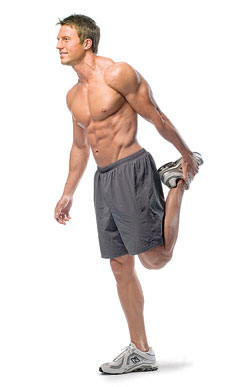
Monday, 13 April 2015

"Eat your pasta" says granny!!

One may have heard, throughout their athletic life, that they should eat pasta before sport. Many may even have a specific pre-game meal that they have been eating prior to competition since they can remember. However, how many people really know what they are eating? What is this food doing to my body, and will I score a goal tonight if I eat this, or miss the net if I eat that?

Well, here it is, the myths and facts of carb loading and its effects on performance. Typically, one consumes roughly 50% of their diet through carbs, one of the three macronutrients (proteins and fats make up the three).  With one carb resulting in the equivalent of 4 calories, a person who is supposed to consume 2400kcal in a day would see 1200 of those come from carbs, meaning 300g of carbs per day. Initially upon looking at the numbers, 300g of carbs in a day is a lot, but not to the general public in terms of what is a carb. The simplest of terms, a carb is anything that is not a fat or protein. Well, gee thanks! Carb are things such as all of our grains, wheat’s, pastas, sugars and breads. It is also, our vegetables, our juice, and even some hidden in things like almonds.

So, why would we carb load for performance?

Simple, carbs are the fastest at metabolizing in the body to supply energy to the muscles. Intramuscular glycogen and glycogen stored in the liver come from our exogenous carbs we ingest. As well, carbs are the ONLY fuel used by the brain. The more carbs in the blood stream, stored in muscles and liver, the more work we should be able to complete. Yes protein and fats are wonderful forms of fuel for the body, however, they take longer to be used up and it is harder for the body to burn them as fuel. Carb loading, by my definition, is exceeding 8g of CHO per kg of body weight. This same said individual, who need 2400kcal a day weighs 98kg, would now need to consume 784g of CHO a day, which works out to 3136kcal. Yes, much over the kcals required to maintain weight, but we have not factored in their sport performance and the calories expelled there. In my opinion, carb loading can be effective, if done correctly. Give at least 24 hours of CHO loading prior to performance for best results. Is it necessary or recommended for recreational athletes? Absolutely not. It is impractical to spend that much money on more food combined with the time requirements and the effect on the body (ie. feeling bloated, feeling sick, gastrointestinal issues, higher blood pressure, etc). What athlete would want that before an event?!

New Age Carb Load: Personally, I would follow this ‘carb load’ in high intensity, long endurance events such as a marathon, ironman, ect. Mainly, it is only effective in sports where there is no ability to refuel during the sport. These athletes should follow the 1 to 1 rule when exercising. 1g CHO for every one minute. This would be why carb loading is not effective for the big 5 professional sports: NHL, MLB, NFL, NBA, PGA. The newest idea in the sporting world is 3-4 days before a major event would be to simply add 200-300g to your daily CHO consumption.


Questions? Langdon.4747@gmail.com

Friday, 3 April 2015

Running Shoes, You Need Them to Run..or Do You?


As we enter the long weekend, the weather is slowly (and I men slowly) getting nicer.  With the weather getting above freezing temperatures, it is time to start running outside, if you haven't already.  Running is an easy form of exercise, as you can do it pretty much anywhere and it doesn't cost you a dime.  There are many things I can get into when it comes to running, such as your form, your arm movement, your cadence, how high your knees should raise, how low your heels should be and more.  But before I ever get into those things, many of you need to know the importance of running shoes...or lack thereof.  I will briefly discuss barefoot running and minimalist running compared to running with your good, ol' fashioned running shoes.

There is quite a craze going on with barefoot running and minimalist running. It seems every shoe company has some sort of minimalist shoe to complete with the Vibram Five Fingers shoe. Everything from the Nike Free to the New Balance Minimus.  Many people want a barefoot feel, or run barefoot itself.  But what is the big difference?  First of all, if you've always run with shoes on, borrow a pair of Vibram's and go for a run.  Then, over the next couple of days, tell me how your calves feel. Basically, it's the heel strike.  Barefoot or minimalist running greatly reduces the impact of the heel strike by forcing you to strike with the mid foot. and forefoot  Running shoes with a nice cushion, allow for a heel first impact.  Take a look at the two graphs below. They are from Daniel Lieberman's 2010 Nature paperwhich discusses the footsrike patterns in barefoot runners compared to those who run with shoes.  

 
It seems pretty clear that barefoot running is better than running with shoes on, as the amount of impact with your initial foot strike is absent.  Not so fast.  According to certain work done by various doctors, 75% of running injuries occur during push-off, not during heel-strike.  So tendonitis, plantar fascitis and shin splints are caused after heel-strike and impact force is pretty much the same in both graphs, barefoot or shod.  Interesting, eh?  If all the injuries occur during push-off, then why the big push for barefoot or minimalist running?

Barefoot and minimalist running has been around for a long time, even though shoes like the Vibrams are more recent to come out.  There is a reason why we were led to believe that cushioned heels were more important.  It's because the research suggested it.  Research pointed towards running with cushion soled shoes.  It reduces injuries is one argument.  But the same can be said for barefoot running.  Two theories stemming from the same research.  If you like barefoot running, you are probably drawn to the graphs above and the impact (or lack of it) with barefoot running.  But you could be an advocate of shod running, and are more drawn to the injury rate and what causes them.

So, what does that mean for you? It means you have a choice.  Running with Nikes and a nice cushioned sole isn't necessarily bad, but either is running with Vibram's and no cushion.  The debate on whether you with shoes or without comes down to how you interpret the research and individual preference.  I like minimalist shoes and run with Vibram's, but you may like a thick, cushioned sole for your running shoes.  Shoes are an important piece of equipment when it comes to running and I may have just confused you even more with no answer to "with or without", so you'll have to draw your own conclusions on the debate!!


Thursday, 26 March 2015

Thirsty anyone? Maybe you shouldn't wait till you're thirsty!!


By Christopher Langdon

The effects of hypohydration, the state resulting from dehydration, have been widely documented in literature and throughout an athlete’s life. Hypohydration, as defined by RJ Maughan in a recent article, is the “impact of mild dehydration on wellness and on exercise performance”and is a “1-2% decrease in body weight due to waterloss” . However, one may not know exactly why hypohydration effects performance nor to what degree if any, it has in impairing our performances.  


The body is made up of almost 60% water, and there is 5-10% water renewed in the body each day, 
water turn-over rate. The body is much less able to deal with fluid restriction than deal with food-restriction. The performance of prolonged exercise, particularly in warm environments, can result in major loss of body water, with potential for adverse effects on performance.  Some athletes could lose upwards of 10-12L of sweat loss in one athletic event or training bout. There  body removes water from a variety of ways, including:
          - urine (~1400ml)
          - feces (200ml)
          - insensible losses from the lungs (400ml)
          - loss through the skin (500ml). 
Water deficit of only a few percent will impair physical performance: a slightly larger loss will bring symptoms of tiredness, headache and general malaise.” 


Effects of hypohydration on wellness
As mentioned in the aforementioned article, severe dehydration can be clearly detrimental to health and is associated with compromised cardiovascular function, renal impairment, weakness and lassitude, and a number of diffuse symptoms, including a headache and nausea. In the same article a study was done where 15 subjects underwent a 37-hour fluid restriction followed by normal fluid intake for a period of 37 hours. In both sessions the fluid retention group and normal fluid group, were given a questionnaire at time periods
12, 24, and 37h. The main surveyed questions asked them to rate their ability to concentrate, alertness, tiredness and headache. In ALL cases, the group with the normal fluid consumption recorded better results. This results in the claim to be made, that when one is hypohydrated they will have a harder time concentrating, be less alert, be tired quicker and have a higher prevalence of headaches.


Effects of dehydration on exercise performance
Most of us athletes have heard our coaches say to drink when we are thirsty, or give us set times to have water breaks. I am saying that you need to drink before the onset of the thirst reflex from the body. The article “Impact of mild dehydration on wellness and on exercise performance” that I have been reviewing reports that subjects do not report the thirst reflex until they have lost 2% of body mass via water. Meaning, when one is thirsty it is too late and one’s athletic ability is being impaired!


The Science
When one is exercising the body cools through the evaporation of sweat off of the skin. With the combination of the sweat and breathing one is losing water from their body. This water comes from the intra and extra-cellular fluid as well as from the cellular plasma volume. When a cell goes from a euhydrated (normal) cell to a hypohydrated (dehydrated) state there is a decrease in work capacity of the cell. Meaning it can no longer function properly or as efficiently as before. Couple this with the fact that when one is hypohydrated there may be a restriction of blood flow, this means that the blood will divert to the muscles that are working to supply them with nutrients. Thus meaning there is less blood flow to the skin and less ability to cool the core body temperature. When the body “overheats” it is coming out of homeostasis and negative performance is a result. The article stated that a reduction of 2% of body mass, hypohydration, had modest restrictions in performance.


Therefore, take frequent small sips of water to avoid cramping from chugging. Hydrate before, during, and after exercise and do not wait until you’re thirsty to have a drink. Act to prevent the dehydration before you must react to the dehydration!

Thursday, 12 March 2015

Performance Nutrition

Nutrition is a topic most of us like to read about, as we think we could all use a little help on the subject.  For many of the non athlete population, it should come relatively simple....even though there are quite a few "diets" out there.  Eat a well balanced diet of  good carbs, proteins and good fats.  Stay away from salt, sugar and processed food.  Keep you caloric intake in check.  Do those things and for the most part, you should be pretty good.  For athletes (or those looking to gain/lose weight, etc) however, it can get a little more complicated.  Athletes need to look at nutrient timing, whether they need to put on muscle, lose fat, whether they are in season, out of season, whether it's game day or leading up a competition.


First, let's take a look at the three macronutrients and what the body needs for each of them.  That is, how much carbs, proteins and fats does the body require?    Carbs can come from a variety of food sources such as grains, cereals, fruits, vegetables as well as from the protein food group, such as milk, yogurt and legumes. Carbohydrates have gotten a bad name in the past, mainly because all the bad things that can be consumed are carbs....and add to out caloric intake but have little or no nutritional value (empty calories)...such as candy, potato chips, ice cream, chocolate bars, etc.  

  • For your average individual, 4-5g of carbs for each kg of body weight, each day should be sufficient.  
  • Athletes usually require a little bit more (usually because their activity level is quite high and carbs are their main fuel), raging from 6-10g per kg of body weight each day.  Endurance athletes can even require slightly more.  

Next is protein as is a very important part of our diet.

  • Your average per on should be consuming 0.8g of protein for every kg of body weight each day 
  • Athletes should be consuming 1.2-1.8g per kg of body weight, depending on whether they are an endurance athlete or strength/power athlete. 

You need to be aware that you might have to intake more during the for few months of training when you are in a hypertrophy stage and the muscles need a little extra protein.  Also, be aware that too much protein can shift your dietary carb levels to below recommended intake values, which may affect performance.  Protein can come from a variety of food, like meats, poultry, fish, eggs, beans, vegetables and more.

The final macronutrient is fat.  Though you might think of fat as a bad thing, there are a few reasons why fat is essential to the body.  One of the big reasons is it's used as an energy source....after about 15-20mins (though as intensity level rises, the use of carbs as fuel also increases).  Fat intake can vary from about 20-35% of you total energy intake every day.  Athletes can stay in this range as well, as it usually varies depending on the sport.  There are some gender specific requirements for fats that might inhibit performance, but I won't get into that.  As long as you stay in the 20-35% range, you should be good.

Your total calorie intake is the next thing I will quickly cover.  Most athletes consume roughly 3000-5000+ kcal/day.    That should keep in pace with their activity level and requirements for each macronutrient.  A lot of strength athletes consume 44-50kcal for every kg of body weight per day and some may ever require more. You can drop to low-enegy diets of between 1800-2000kcal/day or less, but many negative repercussions are associated, including weight loss and a disruption of the reproductive function in female athletes.

Timing of nutrient intake can be very important for athletes when it come to fuelling before/after exercise, muscle/energy recovery and muscle building strategies. These are a few guidelines to follow when getting your pre-exercise or pre-game meal:

  • sufficient fluids to maintain hydration levels
  • low in fat and fibre to encourage gastric emptying and minimize gastrointestinal distress
  • high in carbs to optimize glycogen stores
  • moderate in protein
When time permits, larger meals about 3-4hrs before exercise/competition with about 200-300g of carbohydrates is usually good....but when time to competition is closer, meals can be smaller.  For recovery, try a carbs and protein in a ratio of about 4:1 and aim for 30-45min after exercise to maximize the recovery process and then 1.5g of carbs per kg of body weight in 2-hr intervals thereafter.

Though this is a brief overview, it should give you an outline of where you are as far as your nutrition habits and what you need to do or try.  Everyone is different and everyone's tolerance is a little different.  Eating a large meal 3 hrs before competition is fine for some, but others may need 5 hrs.  Just be aware of what make you feel the best and try to follow decent nutritional guidelines in order to maximize your performance!!

Tuesday, 3 March 2015

Rest, we all need it!!

Rest and breaks, we couldn't live without them. We all need rest and breaks from a lot of things, from work life to home life.  But when it comes to training, the right amount of rest and taking a break at the right time and for the right amount of time can make a huge difference in making the gains (or losses) you desire.  I will go into a bit of detail on the importance of rest in your training and what can be accomplished with the amount of rest you take.

Let me first start of by saying, as a trainer, rest is a tough concept to get through to clients.  I find it much easier to get through to athletes the important of rest, than I do to the non-athlete population, who hire you to pretty much kill them (at least most do).  When they do not "feel it" at the end of a workout or the next day, they don't think they worked hard enough.  Though that is a topic for a different post, it does lead into the topic of rest periods.
Resting After a Workout
Now, when training, you must know what your goals are and what you are training for.  Are you training to run a marathon? Are you working to increase your speed? Are you working on your conditioning level or are you training for power?  These all play a big factor into the amount of rest you should be taking in between sets or in between bouts of sprints.

Let's take a look at the different energy systems so we can better understand the amount of rest we need.  The three main energy systems are ATP/CP, Glycolysis and Oxidative.  Now, at no one time is only one energy system working and it is important to train all three.  I have made a small list of a few sports their primary energy source by percentage:

Sport                    ATP/CP         Glycolysis          Oxidative
Basketball               60                       20                       20
Distance Running     10                       20                       70
Hockey                    50                       20                       30
Gymnastics              80                       15                        5
Soccer                     50                       20                       30
Sprints                    90                       10                         0
Tennis                    70                        20                       10

Depending on what energy system you are training and depending on what sport you are training for will have a big impact on what your rest times should be.  Training for speed...actual speed, involves proper recovery.  Doing sprints for speed training requires at least 3 minutes to allow for full recovery and allow for you to do the next sprint at full capacity.  The same goes for power training and maximal strength training.  If you are doing a set of cleans or a set of heavy deadlifts, that means you should be resting for at least 3 minutes in between sets so that you can fully recover and you can lift that same weight the next set.

The biggest need for rest intervals is the replenishment of ATP and creatine phosphate.  That is the main energy system used for power, maximal strength and speed training.  The following is an outline of different rest intervals and their impact on the ATP/CP system:

  • 20-30 seconds of rest will allow for approximately 50% recovery of ATP/CP
  • 40 seconds will allow for approximately 75% recovery of ATP/CP
  • 60 second will allow for approximately 85-90% recovery of ATP/CP
  • >3 minutes will allow for approximately 100% recovery of ATP/CP
Though other factors, such as your nutritional status, fitness level, training experience and muscle mass can all play a role in rest intervals, it is important to schedule proper rest intervals and take the proper rest intervals in order to achieve your training goals.  


Wednesday, 25 February 2015

Delayed Onset Muscle Soreness...I bet you've felt it!!

You had a great training session, worked hard and your muscles are feeling nice and tired, but that's about it.  You wake up the next day, and the feeling is a little different.  Your muscles feel tight and pretty sore, but bearable, as you think..."at least I can move".  You get a good a good rest that night and wake up the following morning and the "pretty sore" feeling is no longer there.  The pretty sore has turned into excruciating pain!!  Your bedroom is upstairs, which means that you need to go down the stairs to start your day and oh, the pain of walking down the stairs.  You think, "I can't move, what did I do to deserve such agony?" Great training session now, eh?


This feeling is the muscle soreness called delayed onset muscle soreness (DOMS).  It doesn't come right after you workout, but 24-72 hours later.  It's thought to be a result of little tears in your muscles (which, over time, will repair and leave yourself feeling stronger).  Some people realize the need for a little pain and like the feeling.  Others avoid it at all cost.  Getting a better understanding of DOMS will allow you to better prepare for it, avoid it if you need to and recover from it if the feeling is there.  So, let's take a look at DOMS a little closer to help you in the future.

What can cause such pain?  Well, it's the length of you workout, the intensity of you workout and the exercise selection of your workout...with the most emphasis on exercise selection.  You see, it's the eccentric motion that causes the majority of the problem.  That is, it's the part of the exercise where the muscle lengthens.  Usually, its the downward part of the exercise and in most cases the easiest part.  When you're running down hill and the downward motion of a squat or push-up are all eccentric.  A little note here, however, is that you are roughly 40% stronger on the eccentric motion.  Which means that while avoiding the eccentric parts of the exercise might relieve a bit of soreness, it's hard to make real strength gains without it.

And what about recovery? You've embraced the feeling you'll get when you enter a new phase of your program and start lifting heavy weight, with new exercises. Or maybe, you haven't embraced it...and just have a mean trainer, lol!! Whatever the case, you might want to alleviate some of that pain.  What are your options?  That debate is ongoing.  But before I give you some methods of temporary relief, know that in reality, I follow two methods....1. Go easy and work your way up or 2. Suck it up, lol!!
If you still need another way to get rid of soreness, some of the methods that people say have worked for them are:

- foam rolling
- gentle stretching

- rest & recover
- ice bath
- Aspirin, ibuprofen, or other non-steriodal anti-
   immflamatory
- sports massage
- Yoga

DOMS are an almost necessary part of any training regimen.  If you are new to working out, change your program, increase the weight or just use different muscles that you haven't used before, you will experience DOMS.  You will recover and you will feel better, next time you work out!!

Thursday, 19 February 2015

Physical testing....do you do it?

I just finished testing a young Junior A hockey player, so I can  better develop his off season training program. The testing for him is a little more involved than for regular non-athlete individuals, who aren't training in a particular sport. The tests involve a movement screen to test asymmetries and imbalances, power tests, strength tests, speed tests and endurance tests. But the same value comes from tests as the tests from non-athletes. 

There are many different tests, from the bench press test, which tests for upper body strength and is popular in different combines such as the NFL to the good ol' step test, which tests the cardiovascular system. To me (other than the tests which screen for health concerns) there are two main reasons why testing is important for both the trainer and the client. 
The first main reason is that testing gives a good and measurable baseline. It gives you something to go by so you can see either improvement or regression. How important is it to see the two months of training you've out in has made a difference? Very important to both the trainer and the athlete. To see that you are stronger, faster, have lost weight or dropped body fat. Or maybe you've been tested at the beginning if the season and at the end of the season, at which point you notice that you have developed many imbalances that need to be fixed.   


The second important reason is so that a proper training program can be developed to suit you. Whether you are an athlete looking to gain strength or a non-athlete looking to lose weight, you need to develop the proper program. An athlete who had great vertical jump testing, but less than adequate scores on the endurance test, might focus on conditioning and cardiovascular activity.  And as mentioned above, you might have developed certain imbalances and getting the proper program will fix those imbalances, whether you just finished tennis season and have a much stronger dominant arm, or finished golf season and have developed poor rotary stability in one direction.


I will close by saying that as important as it is to test, it is equally important to use the tests effectively. Whether it's developing programs or studying the improvements, tests are done for a reason. Just like in school, tests are a measure of what you learned, you need physical tests for any of the reasons mentioned above. Too many times testing  is done just to test.  You are testing or getting tested for a reason.  The results  from your test need to be used and should be used in ways to benefit both the trainer and client!!


Tuesday, 10 February 2015

How do you start your training session or your game?


Well, it's game time.  You show up to the rink in time
Warm Up Activities and Stretching Exercises
to get ready, and hit the ice in time for opening face-off.  Doesn't seem quite right, does it?  What about training? You go to the gym, get changed, go to the squat rack, load the bar with 250lbs and start squatting.  That doesn't seem quite right, either.  What am I missing?  For me, it's quite obvious, but for others, it may not jump out at them.  I think each situation would become a little more complete if I mentioned some sort of warm-up.  Your warm-up, whether it's before a game or training session prepares you for what's at hand, both physically and mentally.

Let's first take a look at the physical side of things and what the warm-up does.  Blood flow, central nervous system, body temperature, heart rate and more are just some of the things affected with a proper warm-up.  By doing a general warm-up you are able to increase blood flow and get the heart rate up, which if you've warmed-up properly before, will get a light sweat on you.  Things like skipping, or light jogging for about 5 minutes is usually sufficient.

You will then do a more specific part of your warm-up, doing movements and involving the muscles that will be used during your game or workout session.  Maybe you're warming up for a lacrosse game, where you would incorporate side shuffles, Carioca, arm/leg swings and more movements that are used during a game.  Or you could be just warming up for a nice workout session where squats, lunges and push-ups would be good.  Whatever the case, getting the muscles primed for use should be a top priority of any athlete.
Next, let's take a look at how the mental aspect is affected with a good warm-up.  Mental preparation for events is a topic that needs it's own post, but for warm-up the mental part is key.  In any sporting event, just thinking about what you are going to do and what you want to accomplish, gets you in the game.  When you get a good warm-up, you are spending time thinking about the exact movements, defending, moving around opponents and more.  You are putting yourself in the game or match.

Warm-ups are important for any sporting event and any workout session.  Like I said above, it get your muscles primed for the upcoming tasks, but it also puts you in the right frame of mind.  While doing your warm-up you aren't thinking about what a great day it is outside, or what your friends are up to.  You are thinking about the game, thinking about the match, thinking about what exercises you're about to do.  Next time you're at your game or workout session, get a good warm-up...it will do a long way into a great performance.

Wednesday, 4 February 2015

Skill Transfer

I was just going over some of the articles I kept from the Motor Control class I took when doing my Master's a few years back and one of the articles that popped out was one on skill transfer.  For example, does the training an athlete does to work on foot speed transfer smoothly into the sport they are training for? Or, how does learning one skill transfer into learning a similar skill?  Let's take a look at both those examples to see what they mean from a training perspective.

First, we'll take a look at how learning a skill transfers into learning a new skill.  Let's take throwing.  It has been shown that you should first learn to throw correctly overhand, before learning a different technique, such as hitting a tennis ball overhand.   Many young children are put into tennis programs and being taught the overhand serve/volley, without even learning how to properly throw.  When you look at the actions of both the overhand throw and the overhand serve you will see the similarities.  Both involve weight transfer in the direction of a target, hip extension, and so on.  You can see how the skills learned in throwing can transfer quite seamlessly to the skills of an overhand serve in tennis.  And this can relate to more fundamental motor patterns such as running and jumping, which should be learned before more complex movements are taught.


For training, what exactly does this mean.  First, you need to make sure you cover the basics.  Take youth training.  Training for youth should cover running, jumping, kicking, etc. before the more complex movements take place.  When kids have the fundamentals, then the skills learned will be transferred a lot easier into the more sport specific movements.  Seems simple.  But this goes for older athletes as well, not just youth. Learn to squat before you learn to jump.  Learn to throw before you learn to learn to hit a volleyball.

And second we can look at how skills transfer from training into sport.  I will take hockey for my example here.  I take hockey because it's played on skates and much of the training is done, well, not on skates.  So, you would tend to think that training transfer might no be very good when taking what you learned on the ground to the ice.  But the transferability is still quite high from training to the sport.  Much of the off-ice training transfer quite well to movements on the ice.  I was training a young hockey player the other day and we were going over the cross-over start, foot positioning and body position. This was not done on the ice, but it has been shown that certain movements transfer well from off-ice training to on-ice game situations.  The trick is being able to decide and distinguish what movements can transfer well.  The more similar the movement to the skill of the sport, the easier the transfer.

A full body rotational power exercise.


This doesn't mean that all training should look like the sport you are playing.  You still need to get strong, get fast and get powerful.  It just means that certain aspects of training can transfer nicely into game situations.


Thursday, 29 January 2015

Acceleration and Sport Performance

Team sports and individual sports are somewhat different in nature.  Both involve great athleticism, foot speed, strength, power, etc.  A sprinter has to have great acceleration before reaching their top speed which they carry on for a certain distance.  For a team sport, like soccer, great acceleration is key but top speed is very rarely attained, before a change of direction takes place and acceleration is needed once again.  I spend time working with both types of athletes.  At the track club, I focus my work with the sprinters and with the team sports, I focus my work with lacrosse, hockey and soccer.

While many might put their son or daughter in track to gain some speed and conditioning for their team sport, I think they might lack the general knowledge of what kind of speed they truly need.  I too, believe that being involved in track can build up your speed and conditioning for other team events, like hockey, but I also understand that being fast is one thing and being fast is another.  Well, let me clarify. Adrian Peterson, a great NFL running back, is super fast.  Usain Bolt, the great sprinter and world recod holder in the 100 metres and 200 metres, is also super fast.  But I think you would agree that Bolt might not make the best football player and Peterson might not run to speed of Bolt.

Scientists see no reason why humans should not be able to run even faster than Usain Bolt.

 
Like I said above, the team sports need a high degree of acceleration and change of direction speed, while sprinting, you will end up using your top-end speed and don't have a need to stop and change direction.  Acceleration is key for both, but while the sprinter has top end speed to also train for, other athletes really just need to be concerned about their acceleration (among other things, like skill and team strategy).  The faster they are able to get back up to speed after they change direction, the better.  But how do you increase you acceleration?  There are a few different ways to train for acceleration:

Limb loading - weight attachments to extremities to provide overload while sprinting

Uphill running - running at a higher grade than a flat surface, but to too high as to compromise running form


Weighted vests - use of a load to increase sprint times at 10m to 30m


Resisted towing - use of a towing device, such as a sled that the sprinter tows behind while running


All great conditioning tools and ways to increase the acceleration phase of sprinting!!

Thursday, 22 January 2015

Sport Specific Training


Sport specific training. What does it really mean? To many it means training specifically for a certain particular sport.  That's good and all, but then you can just call it training for that sport, like hockey specific training, or basketball specific training.  To me it means just as it says...sport specific training.  My definition would be training to be more athletic, improving balance, strength, co-ordination, speed, agility, quickness, power, stamina and more.  You are not training for a certain sport, but you are training to be an athlete.  What athlete doesn't need to be stronger, more powerful, be a little more co-ordinated, have better balance, or be more agile.  Yes, there are things that an athlete must do to get better at his or her particular sport, such as skill development, or certain muscle groups that need to be worked on, but in general, all sports take athleticism.

I bet you can name a variety of athletes and sports that use lateral movement, lower body strength or agility.  Is training lateral movement different for basketball than it is for football? Is training the crossover step different for lacrosse than it is for hockey?  Whether you are training the crossover step for lacrosse or training lateral movement for football, you are training to get better.  You are training as an athlete and as an athlete, you use training techniques, such as periodization for in-season or off-season training, but in any case you are training to be a better athlete.

Let's look at something different that comes between sports.  Energy systems.  To me, that is where the big difference in sport specific training comes in.  Let's take a running back for a football team, and a forward for a basketball team.  Both may need such things lateral movement and both use running, but the running back plays very hard for a short time for a short time (a single down) before play stops, whereas the basketball player plays continuous for an extended amount of time, but not may not at full capacity. Totally different sports, totally different athletes and totally different training.  When we are talking specificity, that's where trainers and athletes need to look at what energy systems need to be developed, such as your  phosphagen system like a sprinter, or aerobic system, like a marathon runner.


Whatever the case may be, sport specific training takes on different meanings when you really look at what differs between sports.  If you really want to start getting specific with your training, then look at energy systems.  If you are an athlete, then chances are you need balance, strength, flexibility, power, speed and agility.  But it is the energy system that you tap into that will set your sport apart from other sports.  And if you're a multi-sport athlete and you tap into the same energy system for all your sports, then it will just be a matter of getting a good performance coach or strength and conditioning coach, who can set you up on a good periodized training plan.


Thursday, 15 January 2015

New Year's Resolutions for the Athlete


Well, 2015 is now upon us, and while this is my first lost of the New Year, I'm sure everyone has settled in to this year quite nicely.  There is quite a bit to write about, with all the fitness and nutrition resolutions out there.  It seems every year people are always trying to eat healthier, make it to the gym more, go on a diet, etc.  Let me start off by saying "good job".  Knowing you need need to eat better or exercise more gets you one step closer.  Actually doing it, well, that's another story.  And while many blogs and posts in this New Year are out there to help you live a healthier life, what about the athletes? What does the New Year bring for athletes looking at 2015 to be there greatest year, yet?  What resolutions should they have made?  Let's take a look at a couple resolutions they should have made.

One resolution they should have made is to be a better teammate.  For all the team sports out there, the best teams are only as strong as their weakest link.  I'm sure you've heard that before, just like there is no "I" in team.  How can you be a better teammate?  Try putting the team first.  You need to set aside your personal goals for goals of the team.  And try to be more positive.  Teammates will notice and play better if they are encouraged and aren't criticized by teammates for every mistake that they make. What about listening?  If you can listen to your coach and teammates you will be much better off.  Many times they tell you things that will improve your game as well as the team around you.


Another resolution is to train when need to train and rest when you need to rest.  You need to train smart.  Work on the things that need working on, not just the thing you're good at.  You might not be the fastest player, so work on your speed.  And if you don't have the most strength, then develop your strength.  But resting is just as important as training.  Some athletes don't work out enough.....but some athletes work out too much!! You need to look at your schedule and make sure you fit in rest between, games, practices, school, homework, training, etc.


Those are just two of the resolutions that athletes should have made.  They are not the only resolutions that athletes can make, but are two very important ones.  If you are being a better teammate, training when you need to train and resting when you need to rest, then you are setting yourself up for success in whatever sport you may be in.